• Skip to primary navigation
  • Skip to main content
  • Skip to primary sidebar
  • Skip to footer
  • Join the IGWG
  • News & Updates

IGWG HomepageIGWG

  • Priority Areas
    • Gender-Based Violence
    • Gender-Based Violence Task Force
    • Male Engagement
    • Male Engagement Task Force
    • Youth and Gender
  • Resources
    • Trainings
    • K4Health Gender and Health Toolkit
  • Events
    • Past Events
  • About the IGWG
    • Our Priority Areas
    • The Gender Integration Continuum
  • News & Updates
  • Become an IGWG Member
  • Contact

Resources

Our training materials can be used to introduce a broad range of audiences and backgrounds to important concepts related to gender and health. Each training course focuses on one of five themes that complement the CORE Gender 101 agenda: Gender Integration, HIV + Sexuality, Safe Motherhood, Gender-Based Violence, and Constructive Male Engagement. The courses are designed to meet the geographic and technical needs of cooperating agencies, USAID Missions, and specific projects. Materials range from basics such as using a shared gender vocabulary and programmatic guidance, to user guides on how to conduct a gender analysis, to exercises for gender trainings. The trainings are geared to be used by anyone and with any audience, even those learning about gender for the first time!

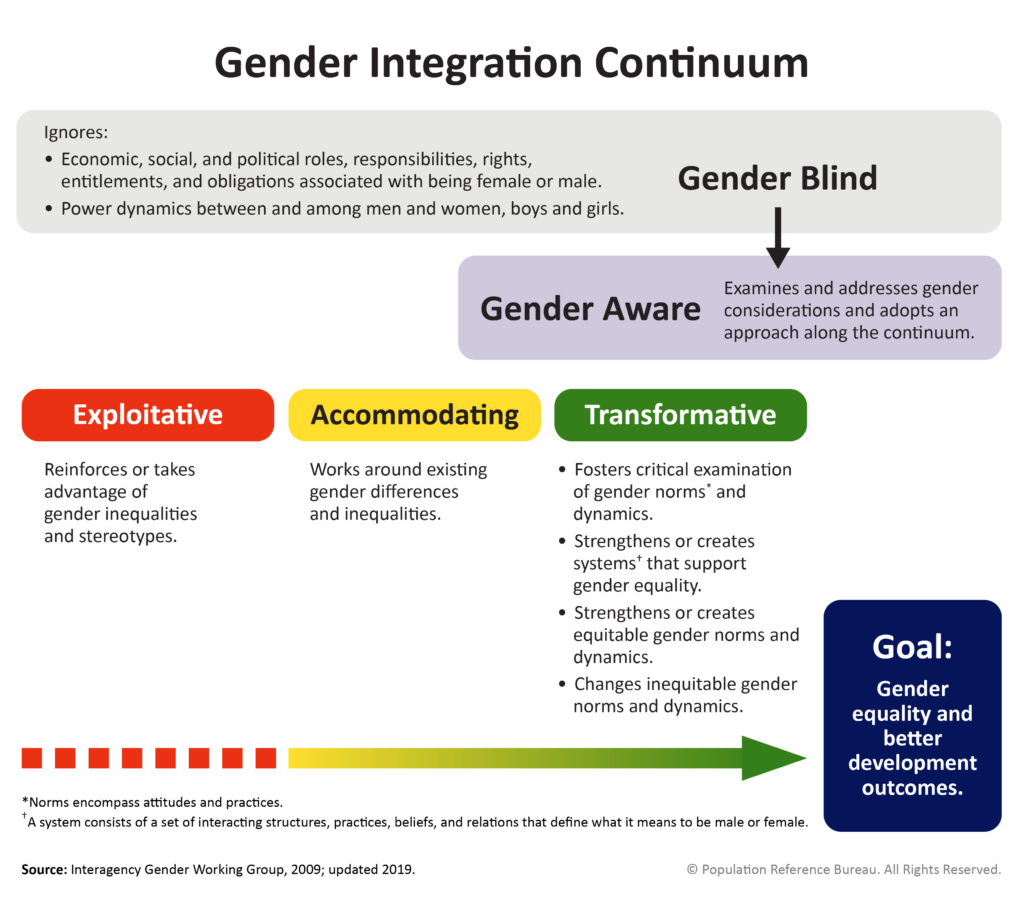
Our popular Gender Integration Continuum framework is an important tool to assess how programs do (or do not) address gender and move them toward more gender-transformative actions. An updated User’s Guide for facilitating training on use of the continuum is available, along with other materials.


  • Brief

2023 IGWG Plenary Brief—Breaking Barriers: Recommendations for Program Implementers Addressing Gender Inequities Facing Global Health Workers

externally hosted at Interagency Gender Working Group (IGWG)

The 2023 IGWG Plenary explored how gender transformative programs can better address workplace inequities affecting health workers, and improve health and gender outcomes. Drawing upon the rich discussion points that emerged from the Plenary, this brief provides examples of common gender inequities facing global health workers and offers recommendations and resources for program implementers on how to address these inequities based on evidence-building practices.
View Resource
    • Website

    2023 IGWG Plenary Member Reflections: Gender Inequities Facing Health Workers

    externally hosted at Interagency Gender Working Group (IGWG)

    The 2023 IGWG Plenary explored how gender transformative programs can better address workplace inequities affecting health workers, and improve health and gender outcomes. Ahead of the event, the IGWG asked members to share their personal experiences facing gender inequities and barriers in the health workforce and addressing these inequities in their work, research, and/or advocacy efforts. This web feature showcases these member reflections.

    View Resource
      • Journal Article

      Systemic Structural Gender Discrimination and Inequality in the Health Workforce: Theoretical Lenses for Gender Analysis, Multi-Country Evidence and Implications for Implementation and Human Resources for Health Policy

      externally hosted at Constance Newman et al.

      This commentary brings together theory, evidence, and lessons from 15 years of gender and human resources for health (HRH) analyses conducted in health systems in six World Health Organization (WHO) regions to address selected data-related aspects of WHO’s 2016 Global HRH Strategy and 2022 Working for Health Action Plan. It considers useful theoretical lenses, multi-country evidence, and implications for implementation and HRH policy.

      View Resource
        • Journal Article

        Breaking the Silence on Gendered Harassment and Assault of Community Health Workers: An Analysis of Ethnographic Studies

        externally hosted at Svea Closser et al.

        Female Community Health Workers (CHWs) are often preferred because they can more easily access mothers and children. At the same time, gender norms are at the heart of many of the challenges and inequities that these workers encounter. This article explores how these gender roles and a lack of formal worker protections leave CHWs vulnerable to violence and sexual harassment, common occurrences that are frequently downplayed or silenced.

        View Resource
        • Gender-based Violence
        • Policy Brief
        • Technical Guidance

        A Conceptual Framework for Gender-Transformative Supportive Supervision

        externally hosted at USAID’s Leadership, Management, and Governance (LMG) Project and PEPFAR

        Supportive supervision (SS) focuses on improving the supervisor-provider relationship to set performance objectives and expectations, monitor performance and provide feedback, address training and professional development needs, solve problems, and motivate and support providers to improve productivity. This technical brief provides a theoretical framework that brings together SS as a critically important mechanism for improving the health workplace environment and service delivery, and gender analysis as a tool to illuminate human relationships, power dynamics, and norms.

        View Resource
          • External
          • Manual/Guide

          Senegal’s New Roadmap for a Gender Transformative Human Resource Management Policy

          externally hosted at IntraHealth International

          Female health workers in Senegal juggle full-time jobs—often to posts far from home–and family duties. These responsibilities can exacerbate interpersonal and family conflict and negatively impact the services they provide to their clients. The Senegal Ministry of Health and Social Affairs recognizes the need to be more responsive to gender inequality, including violence and discrimination, in the workplace, and aims to integrate gender equality in the health sector’s human resources management.

          View Resource

            Primary Sidebar

            Filter By:

            Footer

            Learn More

            • Male Engagement Task Force
            • Gender-based Violence Task Force
            • About the IGWG
            • Contact Us
            • Photo Credits

            Join the IGWG

            We send out two to three newsletters per week to over 2,600 members interested in the IGWG and other gender-related news.

            Subscribe

            * indicates required

            Gender Continuum

            Feedback Form
            • If you are comfortable doing so, please share your email address so we can follow up on your feedback.