• Skip to primary navigation
  • Skip to main content
  • Skip to primary sidebar
  • Skip to footer
  • Join the IGWG
  • News & Updates

IGWG HomepageIGWG

  • Priority Areas
    • Gender-Based Violence
    • Gender-Based Violence Task Force
    • Male Engagement
    • Male Engagement Task Force
    • Youth and Gender
  • Resources
    • Trainings
    • K4Health Gender and Health Toolkit
  • Events
    • Past Events
  • About the IGWG
    • Our Priority Areas
    • The Gender Integration Continuum
  • News & Updates
  • Become an IGWG Member
  • Contact

Resources

Our training materials can be used to introduce a broad range of audiences and backgrounds to important concepts related to gender and health. Each training course focuses on one of five themes that complement the CORE Gender 101 agenda: Gender Integration, HIV + Sexuality, Safe Motherhood, Gender-Based Violence, and Constructive Male Engagement. The courses are designed to meet the geographic and technical needs of cooperating agencies, USAID Missions, and specific projects. Materials range from basics such as using a shared gender vocabulary and programmatic guidance, to user guides on how to conduct a gender analysis, to exercises for gender trainings. The trainings are geared to be used by anyone and with any audience, even those learning about gender for the first time!

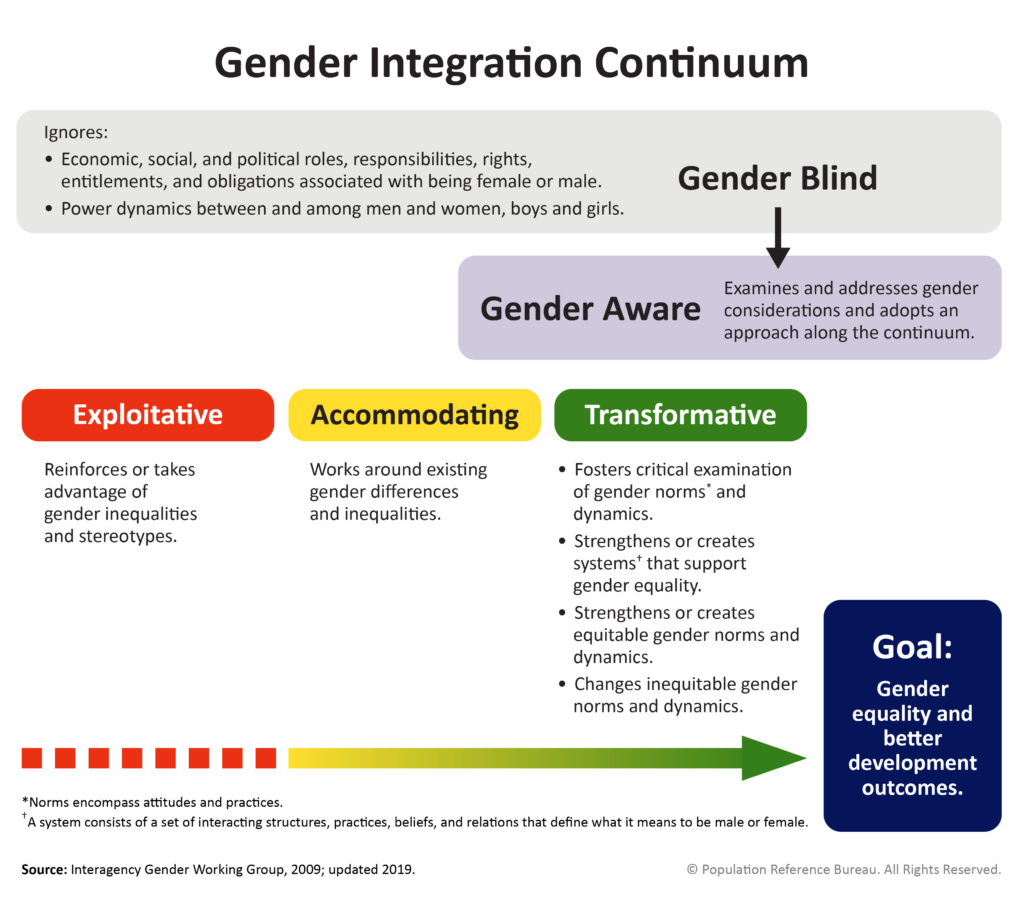
Our popular Gender Integration Continuum framework is an important tool to assess how programs do (or do not) address gender and move them toward more gender-transformative actions. An updated User’s Guide for facilitating training on use of the continuum is available, along with other materials.


  • Blog

IGWG Members Take the Mic Series: Addressing Community Backlash to Male Engagement in Sexual and Reproductive Health and Gender-Based Violence Interventions

externally hosted at Interagency Gender Working Group (IGWG)

The second and final installment of the “IGWG Members Take the Mic” blog series, “Addressing Community Backlash to Male Engagement in Sexual and Reproductive Health and Gender-Based Violence Interventions,” is now available! This blog discusses community backlash, or adverse reactions in communities, to male engagement interventions that utilize gender transformative approaches to prevent gender-based violence (GBV) and promote sexual and reproductive health (SRH).
View Resource
  • Gender-based Violence
  • Male Engagement
  • Report

Addressing Gender Inequalities in Countries Affected by Fragility, Conflict, and Violence: An Evaluation of the World Bank Group’s Support

externally hosted at World Bank

Conflict and fragility can increase women and girls’ exposure to gender-based violence (GBV) and make it more difficult for them to access social services, including sexual and reproductive health services. This evaluation uses several elements to assess the Bank Group’s country support for women and girls’ economic empowerment and GBV prevention and response.

View Resource
  • Gender-based Violence
  • Brief

Lessons from Partnering with Faith-Based Organizations in Very Young Adolescent Programming

externally hosted at USAID’s MOMENTUM Project

In Bangladesh, faith-based organizations have the potential to meaningfully address harmful gender and sexual and reproductive health attitudes, behaviors and norms among very young adolescents, their families and communities. This brief summarizes an activity that sought to strengthen local partner capacity to apply effective programming addressing challenges facing very young adolescents, a population that is commonly overlooked.

View Resource
  • Youth and Gender
  • Podcast

Inside the FP Story Season 5

externally hosted at Knowledge SUCCESS and Voluntary Service Overseas (VSO)

This season of Inside the FP Story, family planning program implementers, health providers, and community members explore the reasons why an intersectional lens is necessary for sexual and reproductive health programs, including family planning. Also, family planning and reproductive health (FP/RH) clients share how their identities have led to unique needs, challenges, and opportunities obtaining FP/RH services—and offer recommendations for better meeting their needs.

View Resource
    • External
    • Technical Guidance

    Guidance on Ethical Considerations in Planning and Reviewing Research Studies on Sexual and Reproductive Health in Adolescents

    externally hosted at World Health Organization

    The participation of adolescents, ages 10 to 18, in health research poses legal and ethical challenges, particularly when the research focuses on sexual and reproductive health. This document highlights some of these challenges and outlines how they may be addressed.

    View Resource
    • Youth and Gender
    • External
    • Report

    Getting to Equal: Engaging Men and Boys in Sexual and Reproductive Health and Rights (SRHR) and Gender Equality

    externally hosted at Equimundo

    Unmet sexual and reproductive health needs are a critical threat to individual health, and gender inequalities remain a significant barrier to addressing these needs. This report addresses male engagement in sexual and reproductive health and rights (SRHR) of their partners, their families, and themselves through gender norms and attitudes.

    View Resource
    • Male Engagement

    Primary Sidebar

    Filter By:

    Footer

    Learn More

    • Male Engagement Task Force
    • Gender-based Violence Task Force
    • About the IGWG
    • Contact Us
    • Photo Credits

    Join the IGWG

    We send out two to three newsletters per week to over 2,600 members interested in the IGWG and other gender-related news.

    Subscribe

    * indicates required

    Gender Continuum

    Feedback Form
    • If you are comfortable doing so, please share your email address so we can follow up on your feedback.